
Is Palmer a Good Long-Term Real Estate Investment?
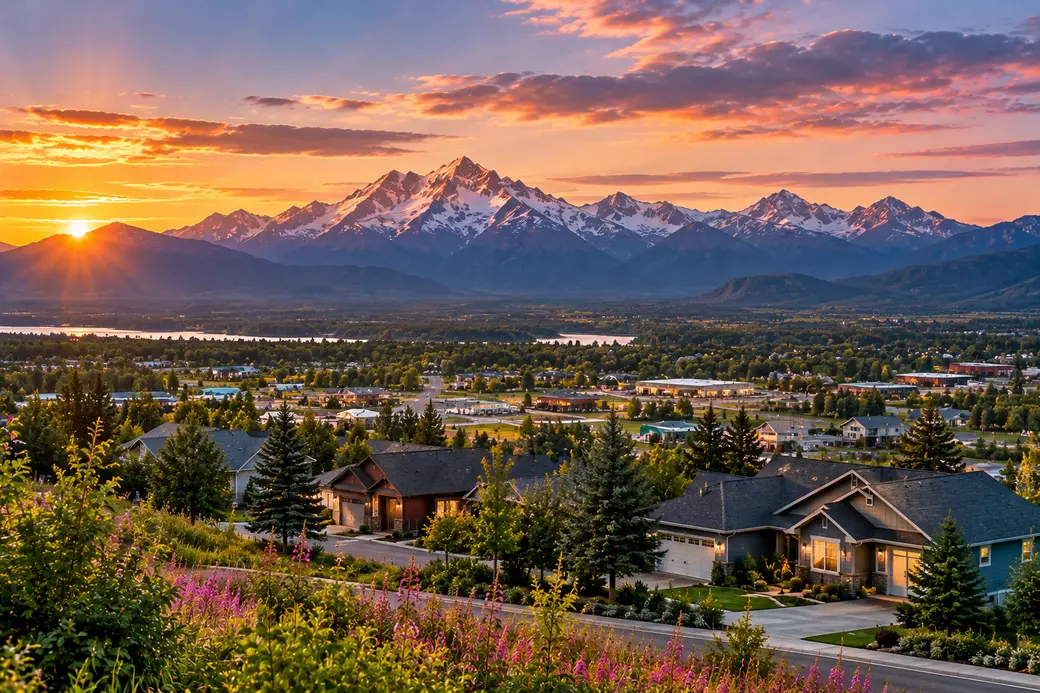
Palmer can be a reasonable long-term real estate investment for buyers who prioritize durable full-time housing demand, conservative operating assumptions, and a patient holding period over quick resale gains. Palmer is an incorporated city in the Matanuska-Susitna Borough, not a county or neighborhood. Its investment appeal is often property-specific: homes with dependable winter access, practical layouts, manageable heating costs, parking, and broad appeal to local households generally offer a more resilient ownership case than highly specialized properties.
Palmer Real Estate Investment Metrics
Palmer real estate investment metrics are most useful when they are evaluated at the property level rather than treated as one citywide conclusion.
- Median Sale Price: Compare recent closed sales with active competition for the same property type, condition, lot size, and utility setup.
- Price Movement: Assess sale-price direction over multiple seasons and years, not just a short run of asking prices.
- Rental Yield: Estimate gross yield using supportable annual rent and purchase price, then test it against heating, maintenance, insurance, vacancy, and snow-management costs.
- Days on Market: Marketing time can differ sharply between central homes, newer subdivisions, acreage parcels, and specialized properties.
The Investment Case for Palmer Real Estate
Palmer real estate investment can support a long-term strategy when the purchase is designed for steady household demand instead of a rapid appreciation trade. The city serves as a regional center within the Matanuska-Susitna Borough, giving many properties appeal to residents who need access to shopping, public services, schools, medical appointments, and regional road connections.
The long-term price trajectory is best viewed through comparable sales for a property’s specific segment. A centrally located home with practical bedrooms, parking, storage, and reliable heating does not compete with a remote acreage property, even when both share a Palmer mailing address. Their tenant pools, operating requirements, maintenance exposure, and resale audiences can be materially different.
Supply is also uneven. Newer subdivisions and outlying parcels can add choices for buyers, while established homes close to city services may have different replacement constraints. That does not guarantee appreciation, but it can make functional, well-maintained homes easier to position for both renters and future buyers.
Palmer tends to fit a mixed buy-and-hold approach. Investors may find the strongest alignment in homes that work for full-time tenants today and remain useful to ordinary owner-occupants over a longer holding period. The central question is whether projected income and ownership costs remain workable through changing seasons and market conditions.
Economic Fundamentals Supporting Palmer Real Estate Investment
Palmer real estate investment is supported by the city’s role as a service center for the surrounding borough. Public administration, education, health-related services, retail, construction, transportation, and locally owned businesses all contribute to the need for housing that serves full-time residents.
This economic mix matters because it is broader than a single seasonal demand source. A property near daily services, employment routes, and established amenities may appeal to renters and buyers whose housing decisions are based on practical routines rather than discretionary travel. For investors, that can support a wider potential audience at resale.
Palmer also functions within the broader Southcentral Alaska economy. Some households live outside the city while relying on Palmer for shopping, appointments, schools, and civic services. That relationship can strengthen demand for homes with manageable commutes, year-round road access, usable parking, and systems suited to Alaska conditions.
Transportation remains part of the investment equation. The Palmer-Fishhook Road and Trunk Road corridors influence how residents move between neighborhoods, services, and employment destinations. A road improvement or changing traffic pattern is not a promise of price growth, but accessibility can affect how easily a property fits everyday life.
For an investor, the most durable demand often comes from ordinary household utility: functional bedrooms, storage, dependable heat, sensible layouts, and reliable access during winter.
Palmer Investment Snapshot
Palmer’s investment profile depends on the property’s function, operating costs, and fit with full-time household demand.
- Price Trend: Values can differ substantially between central homes, new construction, and acreage properties.
- Rental Demand: Homes with practical bedrooms, parking, storage, and dependable heating generally serve the broadest full-time renter pool.
- Job Market: Housing demand is connected to Palmer’s regional role in public services, retail, construction, education, transportation, and health-related work.
- Population Growth: Demand is influenced by both city residents and households from the surrounding borough who use Palmer’s services.
- Inventory Level: Available options vary by access, condition, lot size, utility type, drainage, and winter maintenance requirements.
How Palmer Compares With Nearby Markets
Palmer differs from nearby markets because its investment case combines a compact city center with access to the larger Mat-Su area. Wasilla can offer a wider mix of suburban, rural, and newer-construction options, while Eagle River is generally more connected to Anchorage-oriented commuting patterns.
A meaningful comparison starts with the intended ownership strategy. Palmer may suit an investor seeking city services and a full-time household tenant base. Wasilla may offer more varied housing formats and parcel types. Eagle River may be more relevant when proximity to Anchorage employment is central to the rental or resale plan.
The comparison should focus on current property-level pricing, achievable rent, operating costs, commute patterns, and the likely resale audience. A larger parcel or more remote location may appear attractive at acquisition but require greater attention to private utilities, access, snow management, and ongoing maintenance.
Palmer Rental Market Outlook
Palmer rental investment is most defensible when projected income is tested against the full cost of year-round ownership. Single-family homes with usable bedrooms, parking, storage, reliable heating, and manageable winter access can appeal to renters seeking stability in the Mat-Su area. Attached homes and smaller units may serve a different renter profile, particularly where association rules, shared utilities, or exterior-maintenance responsibilities affect the lease experience.
Gross rent is only the first part of the calculation. Heating, snow removal, insurance, repairs, utility arrangements, turnover work, and vacancy reserves can materially change net performance. Investors should use a conservative operating model that accounts for seasonal maintenance and the cost of keeping a home tenant-ready between leases.
Alaska landlord-tenant requirements also affect operating procedures. Lease terms, deposit handling, notices, recordkeeping, and property-condition documentation should be organized before a tenancy begins. Those compliance practices do not create rental demand, but they can reduce avoidable operational friction over a longer hold period.
Rental demand may be strongest where a property removes practical daily barriers. Reliable parking, safe access, functional storage, appropriate insulation, and dependable heat can matter as much as cosmetic upgrades for long-term tenant retention.
Risks Every Palmer Investor Should Weigh
Palmer real estate investment carries property-specific risks that should be underwritten before purchase. Winter conditions can increase operating demands, especially for homes with older heating systems, limited insulation, difficult snow storage, roof concerns, or complicated access. A realistic reserve should reflect the property’s actual systems and maintenance history.
Flood exposure is another parcel-level consideration. Investors should review the site’s floodplain information and applicable mapping rather than assuming that a property is low risk based only on its general Palmer location. The Matanuska-Susitna Borough floodplain development information provides a starting point for reviewing local flood-related requirements.
Private infrastructure can also affect returns. Some properties may rely on wells, septic systems, private roads, or owner-managed drainage. These features can fit the right tenant or buyer, but they can require additional maintenance planning and a larger reserve.
Finally, specialized homes may have a narrower resale audience. Unusual layouts, difficult access, high utility costs, or features that only suit a small buyer segment can extend marketing time when demand softens. A conservative investor should assess the home’s broad household usefulness before relying on a premium resale assumption.
Investment Property Types in Palmer: A Quick Comparison
Property type should match the investor’s operating tolerance and the home’s likely tenant base.
| Property type | Typical buyer profile | Key risk or constraint |
|---|---|---|
| Single-family home | Investor seeking broad appeal among full-time households | Heating, snow management, parking, utility costs, and year-round access can affect net returns |
| Condo or townhome | Investor seeking a smaller property with shared exterior responsibilities | Association dues, rental rules, reserve funding, and unit-specific restrictions require review |
| Multi-family small plex | Investor prepared for more active management and multiple tenant relationships | Utility allocation, maintenance planning, tenant turnover, and limited local supply can affect operations |
| Vacation or short-term rental | Investor prepared for variable occupancy and hands-on operations | Seasonality, furnishing costs, insurance, local requirements, and management capacity can affect returns |
Pro-Tip: In Palmer, confirm winter access, drainage, and snow-storage conditions before treating a larger lot or acreage setting as an automatic investment advantage. A property that is easy to reach and maintain in summer can present a very different operating profile during winter.
Best Areas in Palmer for Investment
The best Palmer areas for investment depend on the intended tenant and ownership strategy rather than a universal neighborhood ranking. Central Palmer can appeal to households that value proximity to city services, schools, retail, and established streets. Homes with practical parking, storage, and updated core systems may have a broader long-term rental and resale audience.
Properties near major local travel routes can also deserve close attention. Palmer-Fishhook Road and the Palmer-Wasilla Highway influence daily movement for many residents, so commute convenience and dependable road connections can affect tenant preferences. The value of that access still depends on the individual home’s noise exposure, driveway safety, winter maintenance needs, and surrounding land use.
Outlying Palmer-area homes on larger parcels may attract buyers seeking privacy, workshop space, views, or room for equipment. Those attributes can be compelling, but they should be balanced against private utility responsibilities, road maintenance, drainage, heating costs, and a potentially narrower renter pool.
Instead of relying on a district-wide label, compare each property with nearby sales and active competition that share similar access, condition, utilities, lot characteristics, and likely tenant demand. In Palmer, location quality is often defined by how reliably a home functions throughout the year.
Ready to Invest in Palmer?
Samantha Peters of Big Dipper Realty works with investors across Palmer and the surrounding Southcentral Alaska market, from a first rental purchase to a multi-property portfolio. For a straightforward conversation about Palmer property conditions, rental potential, and long-term ownership factors, call or text +1(907) 727-2960.
FAQ: Investing in Palmer Real Estate
Is Palmer a good place to invest in real estate right now?
Palmer can fit a long-term investment plan when the property serves full-time household needs and the operating budget is conservative. Homes with dependable access, manageable heating requirements, practical layouts, and broad resale appeal are generally easier to evaluate than highly specialized properties.
What is the average return on investment for rental properties in Palmer?
A single average return does not describe every Palmer rental property. A useful estimate compares projected annual rent with financing, taxes, insurance, heating, repairs, vacancy, utilities, snow management, and management costs for the specific home.
Is Palmer a buyer's or seller's market: and what does that mean for investors?
Conditions can vary by price range, property type, condition, and location within Palmer. Investors should compare active competition, recent closed sales, expected marketing time, and projected rental income before deciding whether a property supports their target holding period.
What are the biggest risks of buying investment property in Palmer?
Key risks include winter maintenance, drainage and flood exposure, private utilities, access constraints, and limited resale demand for specialized homes. Reviewing the parcel, infrastructure, insurance needs, and realistic repair reserves can help identify issues before they become operating problems.
How does Palmer real estate perform compared to nearby markets over the long term?
Palmer has a different long-term profile from nearby markets because it combines city services with access to the broader Mat-Su area. The better fit depends on the investor’s budget, tenant strategy, expected operating costs, commute considerations, and desired resale audience.
Categories
Recent Posts


Real Estate Professional License ID: 26-489
+1(907) 727-2960 | peters.bigdipperrealty@gmail.com